David Do Paço: A Journey from Research to Diplomacy
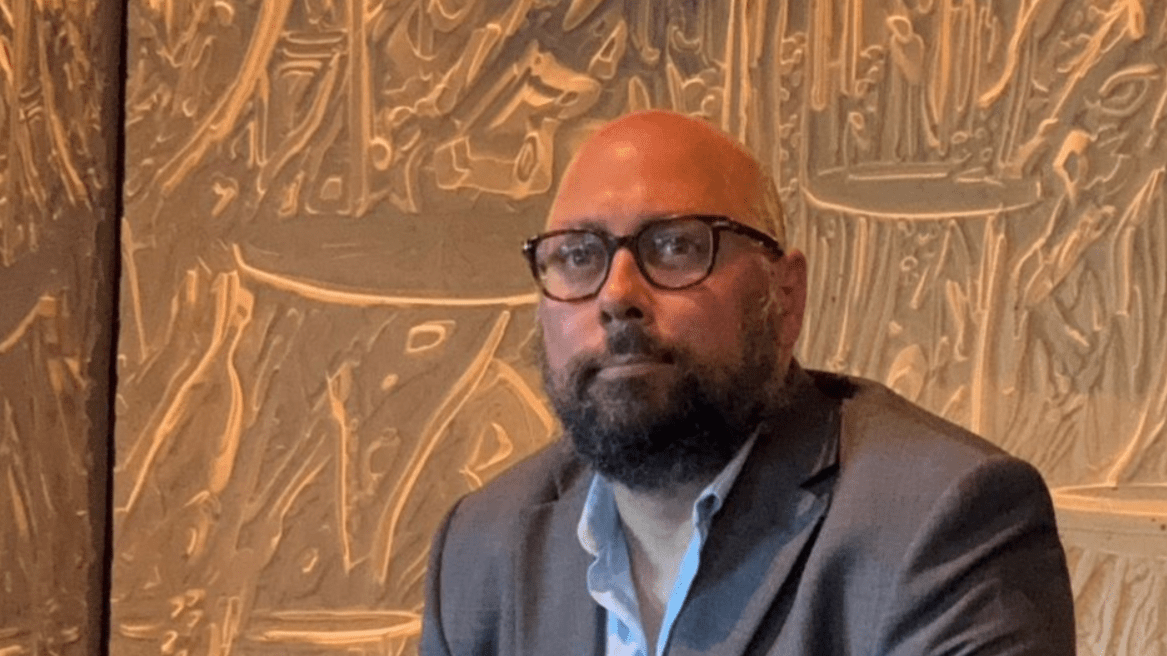
From his first year of undergraduate studies through the defense of his doctoral dissertation, David Do Paço completed his entire academic career at Paris 1 Panthéon-Sorbonne University. After earning a bachelor’s degree in history, a master’s degree in history and anthropology, and then a Ph.D. in history, he pursued an academic career marked by teaching and research both in France and internationally. He has taught at Paris 1 Panthéon-Sorbonne, the European University Institute in Florence, Sciences Po, and Columbia University, among others. His dissertation, which formed the basis for his book *The Orient in Eighteenth-Century Vienna* (Oxford: Voltaire Foundation, 2015), examines the social life of administratively invisible populations and their contributions to Vienna’s economic, social, political, and cultural development. In 2023, after nearly twenty years devoted to teaching and research and having held the Chair of Central and Eastern European Studies at Columbia, he chose to join the Ministry of Europe and Foreign Affairs, where he currently serves as an academic cooperation attaché stationed in San Francisco. There, he now applies his experience as a researcher and educator to foster partnerships between French and foreign universities.
What memories do you have of your years at Paris 1 Panthéon-Sorbonne?
I have many memories of that time. First and foremost, it was a very emotionally intense experience. I had just arrived from Picardy; I was the first in my family to pursue higher education and then to become a researcher. After finishing my preparatory classes, I arrived without really understanding the norms of that environment. I especially remember discovering the undergraduate program, the evocative power of the surroundings, the beauty of the campus, the courtyard, and the lecture halls. Looking back, you realize they’re sometimes a bit old, but at the time, they were incredibly impressive.
It was also an intellectual experience. As an undergraduate, it was possible to take courses on a wide variety of subjects. I remember, for example, attending classes as an auditor on the history of Mesopotamia, which were absolutely fascinating. The further we progressed through the program, the more stimulating the courses became. There were some classes we’d attend almost as if we were going to a show—just to have our minds blown. I’m thinking in particular of the medieval history courses we took while preparing for the CAPES and agrégation exams, which were fantastic. I believe this is part of the unique experience at Paris 1 Panthéon-Sorbonne and stems largely from the high standards the professors held for their students. Having since taught at numerous universities, I have never encountered such a high level of rigor, especially since it was accompanied by an encouragement to think boldly. I believe this has profoundly shaped my personality, first as a researcher and then in the roles I hold today.
Finally, Paris 1 Panthéon-Sorbonne is also a political experience. It is a university with its own democracy and its own political life. This aspect, too, is extremely formative. It leads us to develop a critical perspective on institutions, debates, and, more broadly, the world around us.
Have certain people you’ve met—students, teachers, mentors—played a significant role in your journey?
Yes, first and foremost my research advisor, Christine Lebeau, who—through her expectations, her consistently sound advice, and her guidance—enabled me to write the dissertation I wanted to write and ensure its quality. She is a very demanding person, and I am deeply grateful to her because she helped me acquire skills I didn’t have before. I also remember the many external speakers who came to lead our seminars, whether they were French researchers—such as Jocelyne Dakhlia, who meant a great deal to me and helped me advance my research—or researchers from abroad. I believe that during my doctoral studies, we had the opportunity to meet most of the leading figures in our field, and I consider this an extraordinary asset. When it comes to building a professional career as a researcher later on, these encounters are invaluable.
Have you ever run into people from that period again during your career? If not, would you like to reconnect with former classmates?
Yes, all the time during my academic career. I think Paris 1 Panthéon-Sorbonne—perhaps along with Sorbonne University—awards the highest number of doctorates in history in France. So we end up getting to know each other, and the members of the Doctoral School of History formed a real community. We’d get together several times a year and keep track of each other’s careers.
I remember a conversation I had a few years ago, when I was teaching at the Center for History at Sciences Po, with several colleagues who, like me, had taught at Paris 1. We all spontaneously made and shared the same somewhat nostalgic observation about the third-year undergraduate courses we had taught at Paris 1, the caliber of the students we had there, and the pleasure we had derived from the experience. Nowhere else in my career have I encountered students of such high caliber at that stage of their academic studies. I believe that this nostalgia for the third year of the bachelor’s program is truly part of the identity of Paris 1 Panthéon-Sorbonne and its community of alumni and former faculty members.
During my studies, we had a very rich social life and a group of friends that still exists today. We’ve managed to stay in touch, regardless of our life or career choices. I've also stayed in touch with many of my former teachers. In my current position, I'm fortunate enough to even be able to work with them.
You spent more than 10 years walking the halls of the university—would you say that your time at Paris 1 Panthéon-Sorbonne played a role in shaping your professional career?
Earning a Ph.D. in history at Paris 1 Panthéon-Sorbonne carries undeniable prestige. So yes, it’s a real asset for what comes next. It helps you secure research grants, build and leverage a network, and open a few doors.
And then there are all the skills that pursuing a degree at Paris 1 Panthéon-Sorbonne provides. There, you develop the ability to understand the complex world around us with great care and an open mind. Indeed, when you manage to understand the 18th century using incomplete archives, or when you study a period using sources that require mastery of tools few people possess, it shapes minds capable of understanding the contemporary world, its transformations, and its nuances. These are skills that, despite everything, are not found everywhere and are relevant far beyond the world of research. And the education at Paris 1 Panthéon-Sorbonne enables exactly that: thinking through complexity. And when you’re in diplomatic roles that involve monitoring, analyzing, and advising, that’s fundamental.
In practical terms, this has allowed me to quickly feel at ease in the various positions I’ve held, whether in academia or in my current role. I can easily collaborate with universities like Berkeley and Stanford, which are among my partners. In my initial interactions with them, I would sometimes even introduce myself first as a researcher, and at times as a Ph.D. from Paris 1 Panthéon-Sorbonne. This academic identity often facilitates initial contacts in the American academic world and can even open more doors there than if I were to emphasize my role as an official with the MEAE first and foremost.
To what extent did the curriculum and multidisciplinary approach at Paris 1 Panthéon-Sorbonne prepare you to carry out academic cooperation duties within the Ministry for Europe and Foreign Affairs?
There’s a very concrete example. I had the opportunity to establish the position I currently hold, and to do so, I needed to develop a roadmap. Historically, we’ve worked with French departments because of their mission to teach the language and cultures of the Francophone world. For me, it very quickly became clear that our partners should also include law, economics, and “hardcore” social science departments—whether sociology, history, anthropology, or other disciplines. This is clearly a legacy of my education at Paris 1. Today, these departments are indeed new partners in academic collaboration in San Francisco, Seattle, Salt Lake City, and Honolulu.
More generally, this interdisciplinary education allows us to be intellectually agile and curious, to have the tools to understand today’s world, to think about this complexity within its context, and to try to share as clearly as possible what we understand about the world around us.
I still feel a very strong attachment to Paris 1 Panthéon-Sorbonne. For me, it was a time of social mobility, but also of intellectual fulfillment. I feel genuine gratitude toward the people who were part of that experience, as well as toward the institution and the campus. I don’t necessarily seek to maintain these ties intentionally, but they exist naturally.

Comments0
Please log in to see or add a comment
Suggested Articles